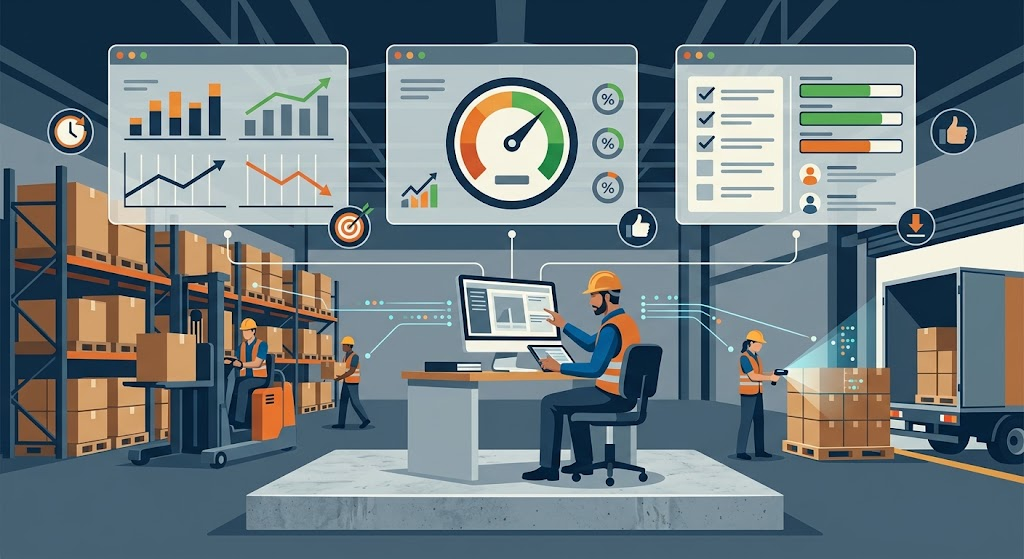
e-Warehouse - Performance management & OTIF
🎯 Learning objectives
Performance management in the warehouse
- Make data-driven decisions: Turn data from WMS, ERP and peripheral equipment into valuable insights for operations, planning, projects and ROI assessments.
- Define key performance indicators (KPIs): Establish SMART KPIs and manage the balance between customer service (quality) and productivity (efficiency).
- Interpret figures from three perspectives: Use trend analysis (development over time), goals/targets (standards) and benchmarking (comparison) to put KPIs into the right context.
- Use profile indicators to explain performance: Determine why a KPI changes by analysing the impact of order, item and receiving profiles.
- Build reliable dashboards: Remove anomalies from data and visualise results using target lines and the traffic-light method.
OTIF & customer-service indicators
- Calculate & monitor the OTIF score: Understand and apply the strict On-Time In-Full metric to guarantee delivery reliability.
- Measure quality indicators: Monitor and improve picking accuracy and Dock-to-Stock lead time.
- Carry out root cause analyses: Identify errors and deviations in the delivery process and launch targeted improvement projects.
- Apply a consistent quality standard: Establish clear definitions and SMART agreements on delivery performance for customers.