
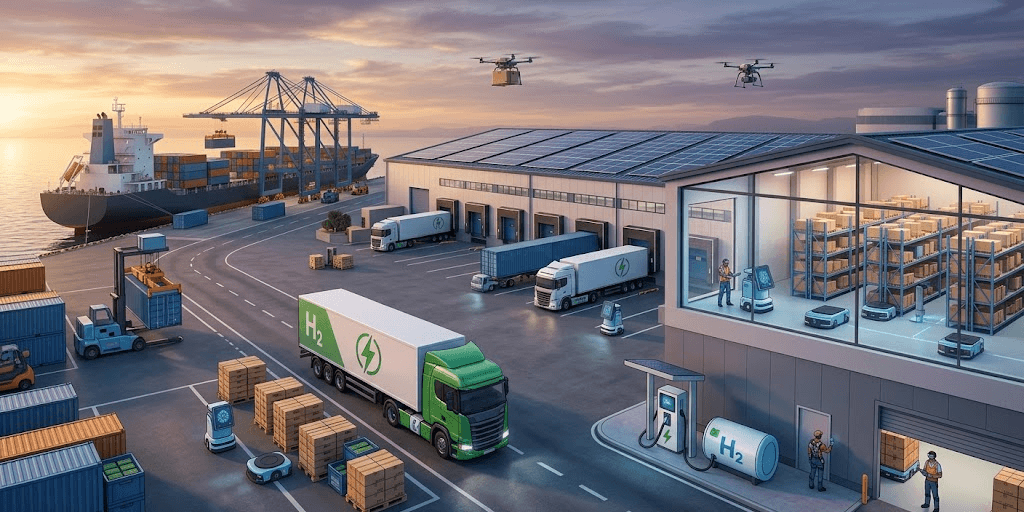
Key trends in logistics
The main current trends can be grouped into four themes:
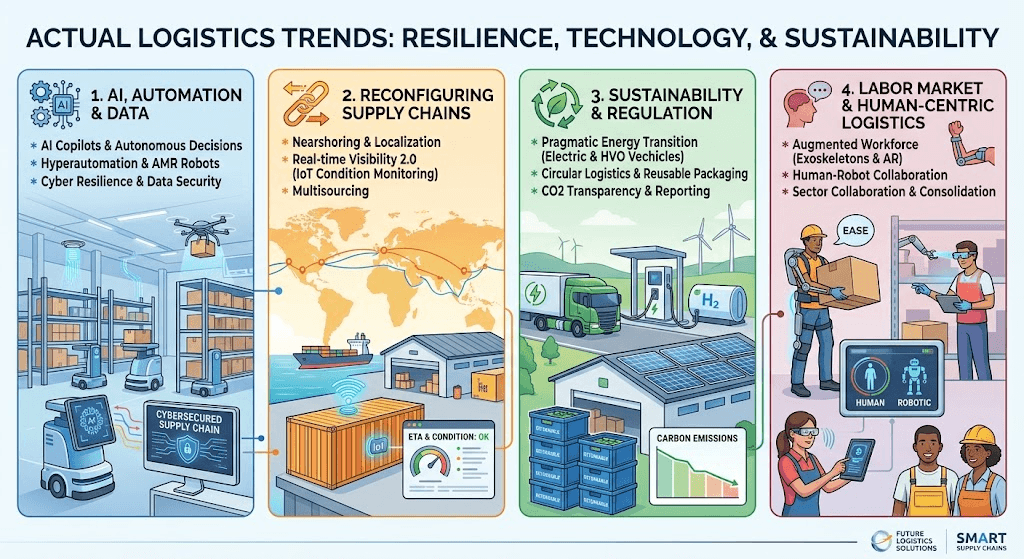
1. AI, automation & data
- AI as a copilot and autonomous decision-maker: AI is no longer used only for forecasting; it also makes active decisions across the supply chain. Examples include automatically rerouting shipments around obstacles, dynamic pricing and predictive maintenance in warehouses.
- Hyperautomation & elastic logistics: Warehouses use modular, scalable robotic systems such as AMRs (Autonomous Mobile Robots). This “elastic” infrastructure allows them to respond flexibly to peak periods without being locked into extremely high fixed costs.
- Cyber resilience: As supply chains become more digital and interconnected, the risk of cyberattacks grows. Cybersecurity has moved from an IT issue to a strategic prerequisite for operational continuity.
2. Supply chain redesign and resilience
- Nearshoring & localisation: Geopolitical tensions, trade conflicts and disruptions to global shipping routes are prompting more companies to choose nearshoring or friendshoring. Stock and production are moved closer to the end market to reduce dependencies.
- Real-time visibility 2.0: Tracking locations is no longer the only standard. Advanced IoT sensors also monitor the condition of goods, including temperature, humidity and shocks.
- Multisourcing: Companies spread risk by sourcing from multiple suppliers and using different modes of transport, reducing their vulnerability to a single bottleneck.
3. Sustainability & regulation
- A pragmatic energy transition: Although ambitions for electric and hydrogen trucks remain high, scaling up in practice is gradual. Grid congestion, high purchase costs and limited charging infrastructure are key reasons. HVO (biodiesel) and route optimisation serve as important intermediate steps.
- Circular logistics & reusable packaging: Stricter European legislation and societal demand are driving the growth of reverse logistics. Smart reusable packaging systems with built-in tracking are increasingly replacing disposable materials.
- CO₂ transparency: Regulations and customer demand have made transparency about emissions for each shipment an essential requirement in quotations and dashboards.
4. The labour market & people-centred logistics
- Collaboration between people and technology: Persistent staff shortages, including a structural shortage of truck drivers and technical staff, make technology essential. The focus is on an augmented workforce: ergonomic aids such as exoskeletons and AR glasses reduce physical strain and make the sector more attractive.
- Sector collaboration and consolidation: High labour, energy and technology costs put margins under pressure. Small and medium-sized transport companies increasingly collaborate in networks or are acquired by larger businesses offering greater scale.