
1. Warehouse organisation & control
  2. Warehouse layout & design
  3. Courses

e-Warehouse - Materials handling in practice
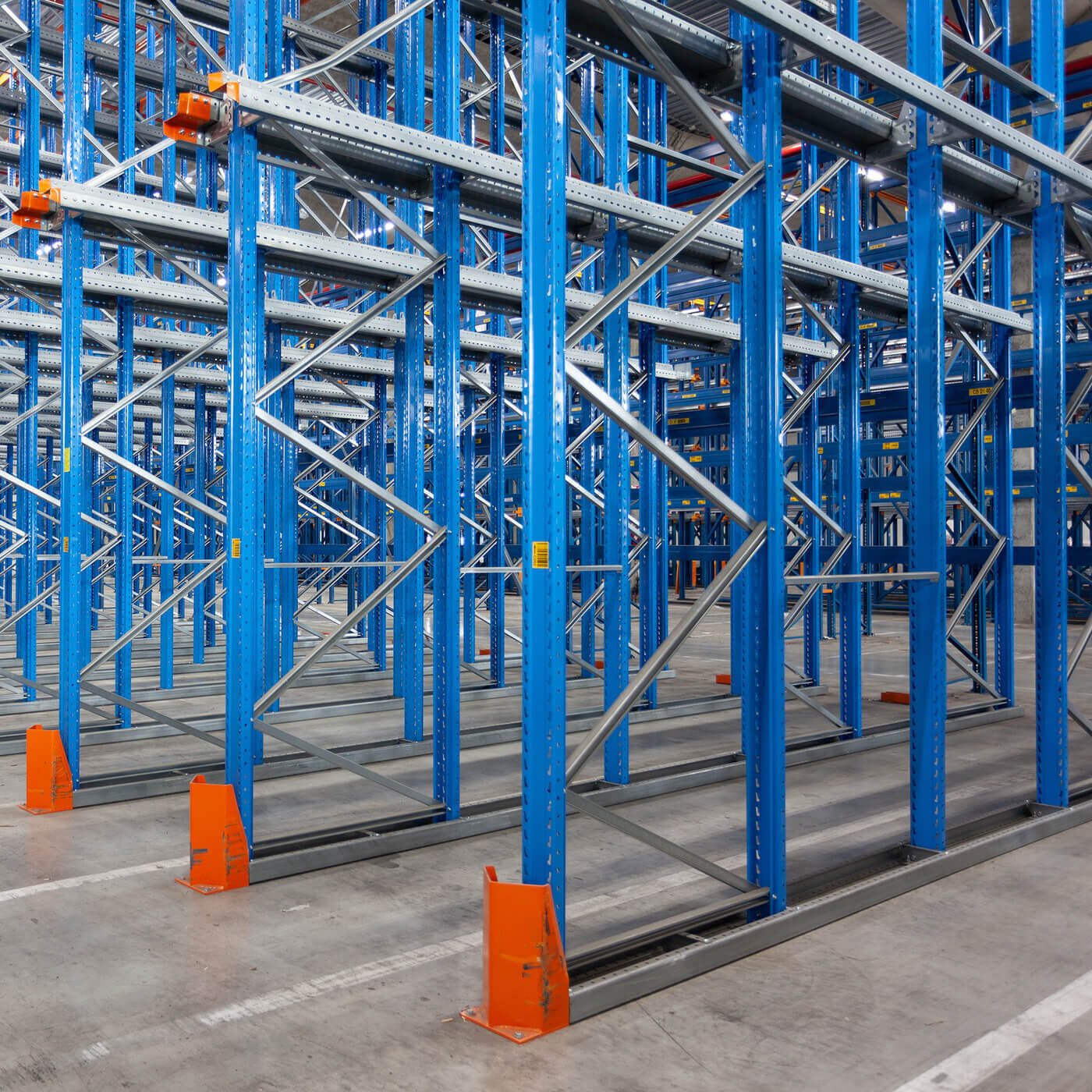
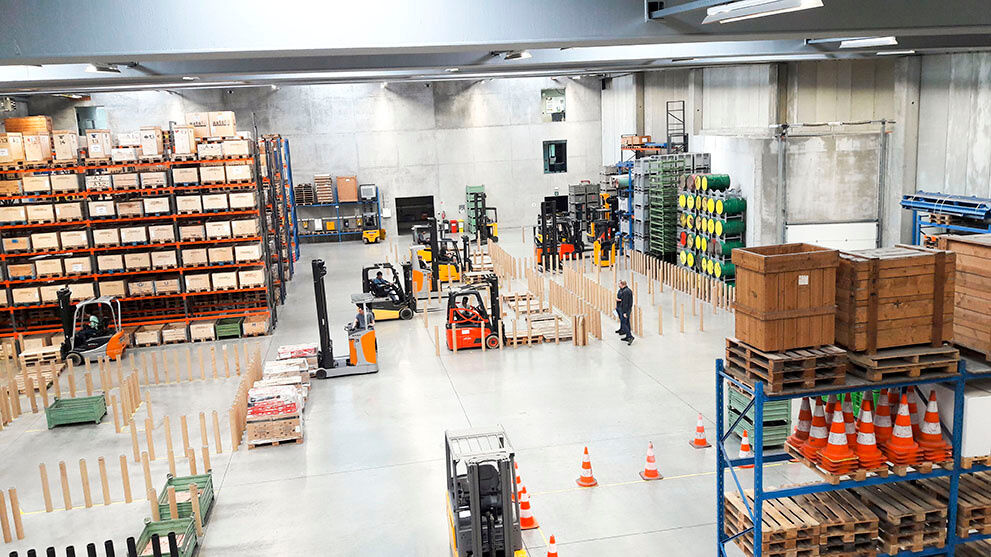
This practical e-learning package provides a comprehensive exploration of the physical and technical configuration of a warehouse. Through in-depth course material and focused instructional videos, participants learn how storage techniques, internal transport and packaging choices work together to optimise logistics processes. It covers all crucial topics, from selecting static and dynamic storage systems for FIFO, FEFO and LIFO applications to the technical construction and sizing of pallet racking. The modules also examine internal transport equipment, from manual pallet trucks to forklifts and automated systems, and the strategic use of primary, secondary and tertiary packaging and load carriers to protect and secure goods.

Standalone module

e-Warehouse - Materials handling in practice
e-Warehouse - Materials handling in practice

e-Warehouse - Materials handling in practice

e-Warehouse - Materials handling in practice

🎯 Learning objectives

After completing this e-learning package, participants will be able to:

Analyse & select storage techniques and systems

  • Explain the differences and applications of FIFO, FEFO and LIFO principles based on product characteristics and turnover rates.
  • Select suitable static storage equipment, such as pallet, drive-in and cantilever racking, and dynamic systems, such as flow racking, carousels and AS/RS.
  • Calculate and optimise storage-location occupancy and utilisation correctly.

Size pallet racking

  • Calculate pallet-racking construction and required clearances accurately, accounting for pallet dimensions, load height, beams and safety margins.
  • Apply safety requirements and accessories such as upright protectors, mesh decking and push-through protection.

Evaluate & use internal transport and material handling

  • Choose appropriately between manual, semi-automatic and fully automatic equipment, including pallet trucks, stackers, reach trucks, forklifts, AGVs and conveyors, based on aisle width, lift height and flow intensity.
  • Calculate operating times and the required number of vehicles using standard times and route analyses.

Manage packaging & load carriers efficiently

  • Assess the functions of primary, secondary and tertiary packaging in relation to cost, quality and environmental efficiency.
  • Use suitable load carriers, such as pallet types, crates and pallet collars, and securing techniques, such as stretch/shrink film, straps and corner protectors, to create tightly fitted, stable transport units.
  • Use a five-step method to align packaging choices and prototypes with physical, mechanical and climatic influences during storage and transport.


What is included in this product?

Standalone module

This product contains 8 e-learning modules. You complete the modules at your own pace.

Access available after purchase.

  • 007A 🎓 Storage Techniques
  • 007B 🎦 Pallet racking and sizing
  • 008B 🎦 Internal Transport
  • 008A 🎓 Internal transport & "Material Handling"
  • 011A 🎓 Packaging & Load-bearing equipment
  • 014A 🎓 Warehouse automation
  • Warehouse Case Study D.02 ✏️ Warehouse Techniques (quiz)
  • Warehouse case study D.09 ✏️ Storage equipment (quiz)

Training several employees?

Would you like to purchase courses for a team or several employees? We would be happy to discuss a solution tailored to your organisation.

Request employee training

Frequently asked questions

  • Each course and workshop clearly states the required entry level and any specific prior knowledge needed. Unsure which level best matches your experience? Feel free to contact us for advice.

    Contact us

  • Yes. After successfully completing an online course or attending a workshop, you will receive an official Certificate of Participation, which you can add to your CV or LinkedIn profile.

  • Yes. Contact us as soon as possible and include your name and the course you registered for. You can find the applicable cancellation terms on the course page.

  • Once your registration has been processed, you will receive a personal login link and practical information by email to help you get started.

    Tip: Haven’t received an email? Check your junk or spam folder, just in case.

  • Go to the page of the course you would like to take and click ‘Register’. Fill in the form with your details and complete your registration. You will receive a confirmation email with all the details immediately afterwards.

  • The requirements are listed on the workshop page and in your confirmation email. In most cases, you only need to bring your confirmation and, if needed, a laptop.

  • Yes, you can. However, you will need to complete a separate registration form for each participant.

    If you would like to register a larger group or are looking for tailored training at your own premises, there is an easier option! Contact us to discuss the possibilities for an in-company workshop.

  • Go to the workshop page, choose an available date and click ‘Register’. After entering your details, you will receive a confirmation by email.

  • Depending on your sector, region and type of organisation, our courses and consulting programmes qualify for specific training subsidies, such as KMO-portefeuille. Contact us or your contact person at your sector organisation (Cevora, Alimento, etc.) to explore the options available to your company.

    Contact us

  • You can pay directly and securely online, including by iDEAL, Bancontact or credit card. For business registrations, you can also request an invoice in advance and pay it within the agreed payment period. Select the appropriate option when placing your order for each course.

  • Yes, absolutely. Almost all our workshops and training courses can be fully tailored to the specific processes and situations within your organisation. Contact us to discuss the possibilities.

    Contact us

  • Our consulting service always starts with an initial consultation without obligation, during which we identify your specific logistics challenges and objectives. We then draw up a clear action plan and a suitable quotation.

    More about logistics consulting