
e-Transport - Vehicle types & legal aspects (road transport)
🎯 Learning objectives
After completing this combined self-study package, participants will be able to:
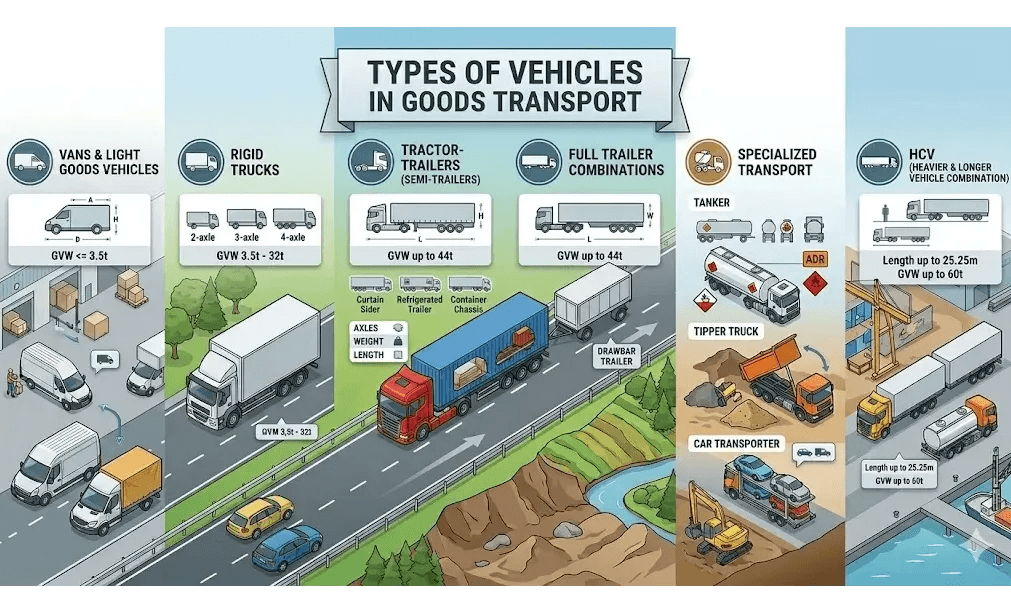
- Recognise & select vehicle configurations: Identify the different vehicle types, including rigid trucks, tractor units, semi-trailers, trailers and LZVs, and select the right combination for specific transport needs.
- Apply statutory dimension & weight standards: Interpret and apply national and European rules on maximum vehicle dimensions, projecting loads, marking plates and maximum authorised mass, including the 44 t, 48 t and 50 t arrangements.
- Calculate payload: Independently determine the maximum permitted payload for different vehicle combinations using the weakest-link principle.
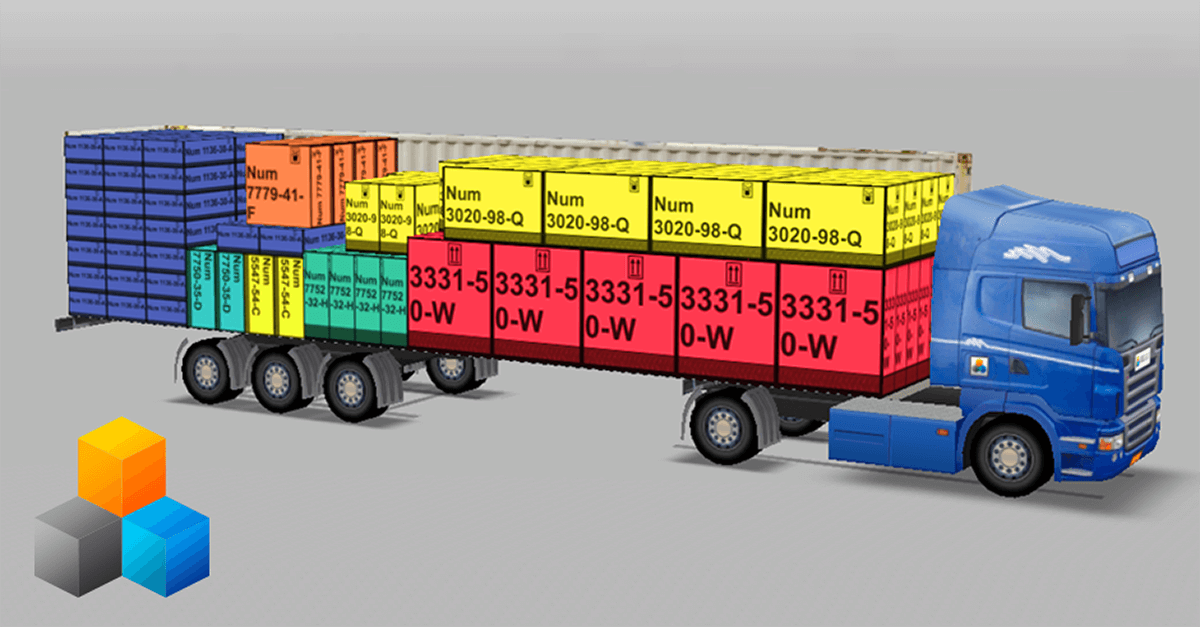
- Prepare a realistic load plan: Determine load utilisation, calculate volumes, including for tankers, and create efficient LIFO-based load plans without compromising safety.
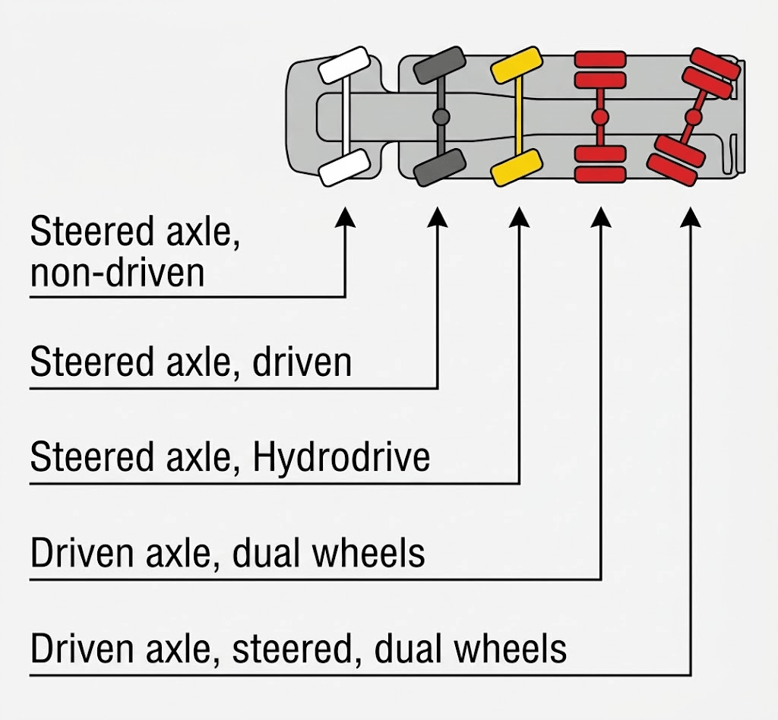
- Manage axle loads & centre of gravity: Monitor statutory and technical axle-load limits, determine a load's centre of gravity using loading charts, and assess dynamic weight shifts during driving.
- Avoid risks & penalties: Recognise common loading errors and axle-load exceedances to prevent fines, vehicle immobilisation and road hazards.
