
e-Transport - Transport files, TMS & Trip planning
🎯 Learning objectives
After completing this combined self-study package, participants will be able to:
Manage transport files & TMS systems
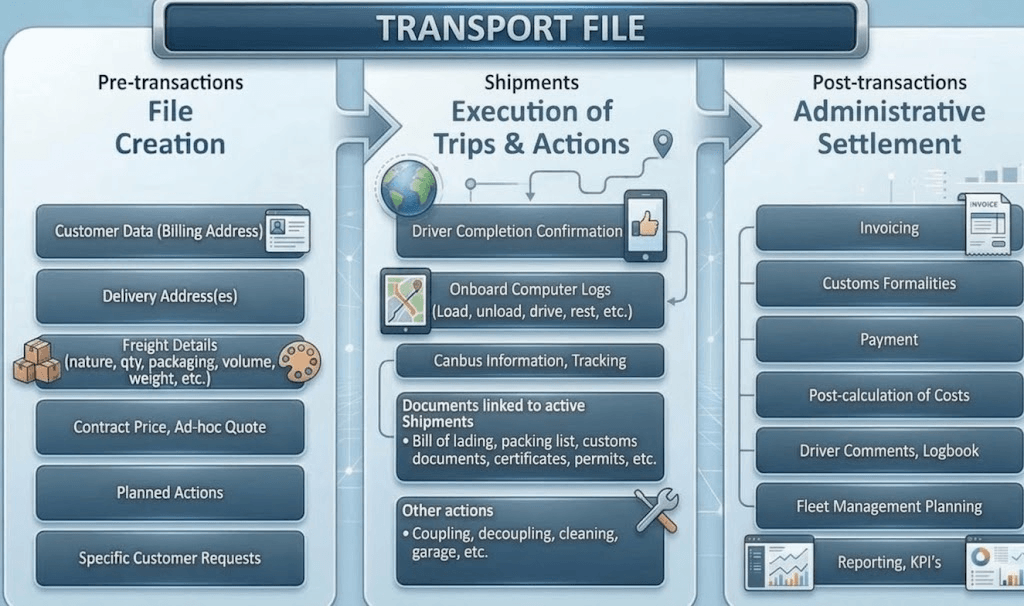
- Structure a transport file across the pre-transaction, transaction and post-transaction stages.
- Understand and apply the core functions, benefits and integration options of a Transport Management System (TMS) within logistics business processes.
- Manage consolidated data on customers, drivers, subcontracted hauliers and fleets, and use it for estimated and actual trip costing and trip-completion reporting.
- Apply basic network-planning techniques, such as Gantt charts, to time and critical-path calculations.
Study transport geography & optimise trip planning
- Account for geography, public infrastructure constraints such as emission zones, delivery time windows, driving and rest periods and physical obstructions, and their influence on routes.
- Carry out drop-size analysis to determine suitable delivery systems, transport segments and vehicle capacities.
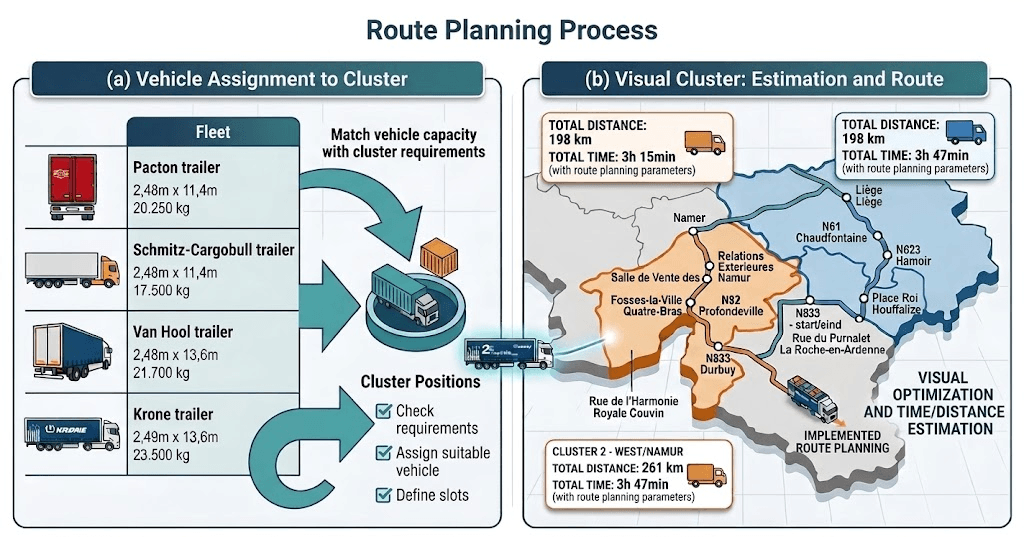
- Apply appropriate trip-planning techniques and rules of thumb (heuristics) to one-to-one, capacity-constrained one-to-many and many-to-many transport situations.
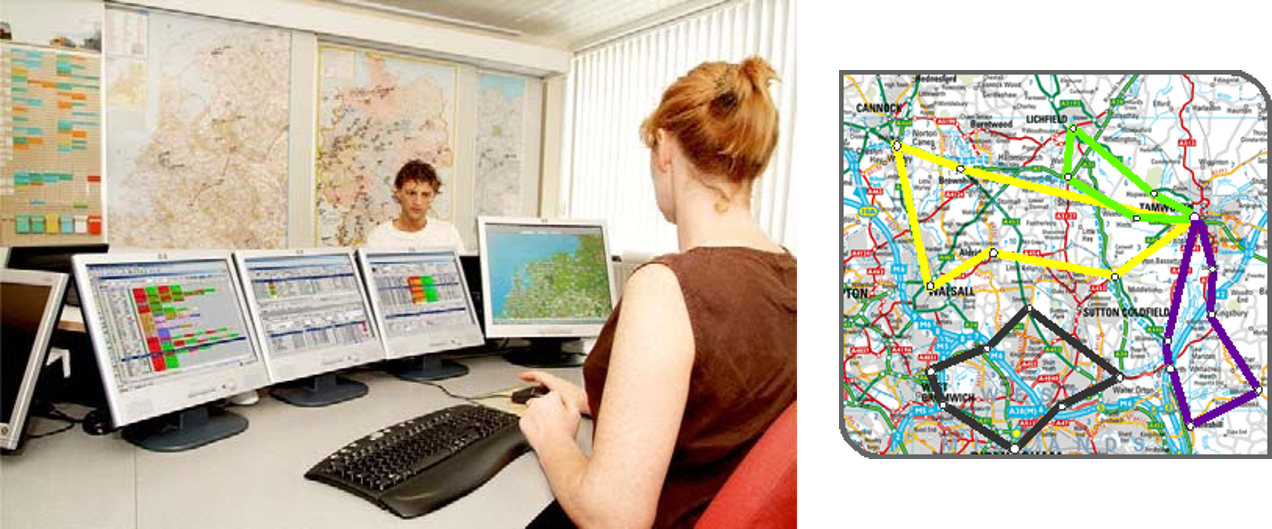
- Explain the difference between static and dynamic planning and make full use of automatic route planners, digital planning boards and on-board computers.
