
e-Transport - Specialised forms of road transport
🎯 Learning objectives
After completing this combined self-study package, participants will be able to:
Recognise regulations and specialist areas
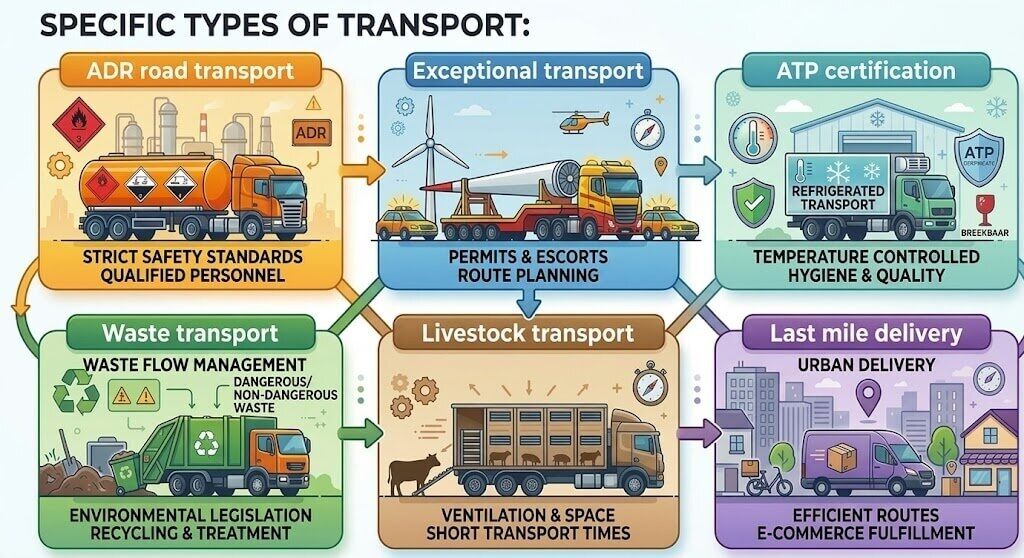
- Distinguish the main categories of specialised road transport, including ADR, ATP, abnormal-load transport, waste transport, live-animal transport and urban distribution, and identify the relevant regulations.
ADR: dangerous goods
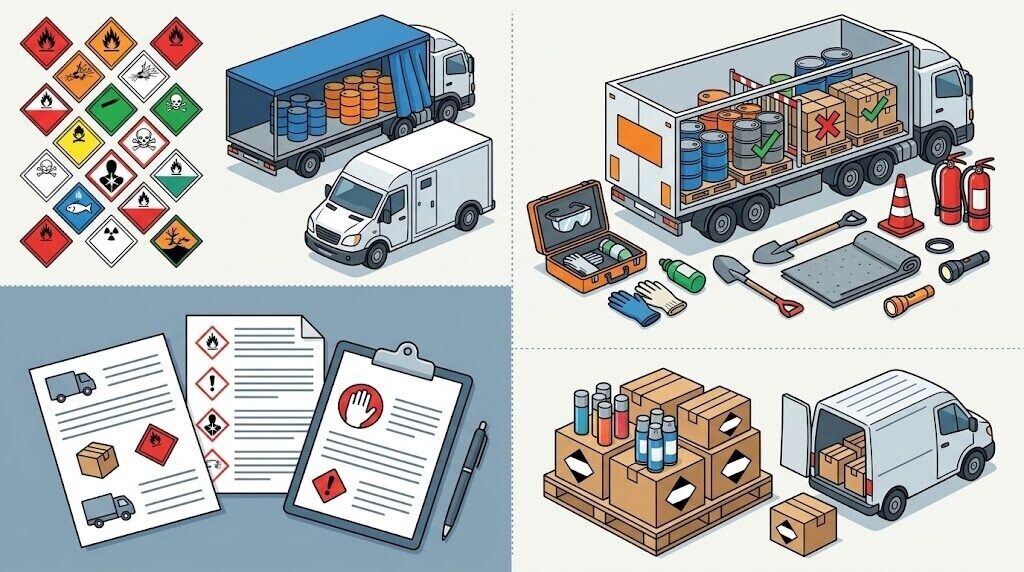
- Identify the 13 ADR hazard classes and the difference between open and closed classes.
- Interpret mixed-loading rules, mandatory vehicle equipment and required documents, such as CMR documents with UN numbers and MSDS hazard information sheets.
- Apply the basic principles of the Limited Quantities (LQ) exemption scheme.
ATP: temperature-controlled transport
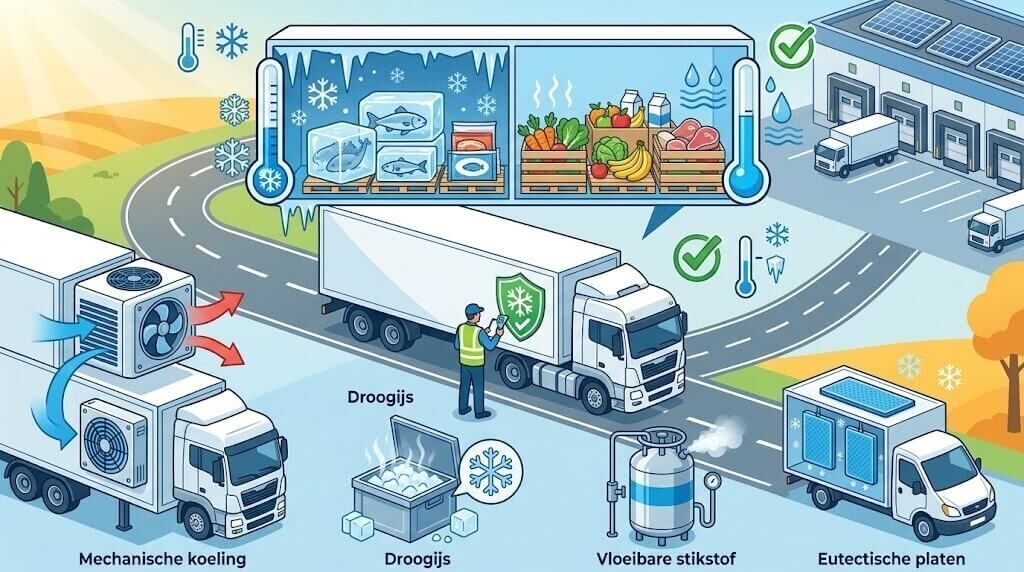
- Understand how the ATP agreement works and apply the correct temperature requirements for perishable goods, both frozen and chilled.
- Recognise the different cooling and heating systems, including mechanical systems, dry ice, liquid nitrogen and eutectic plates, and the required ATP certification.
Abnormal-load transport
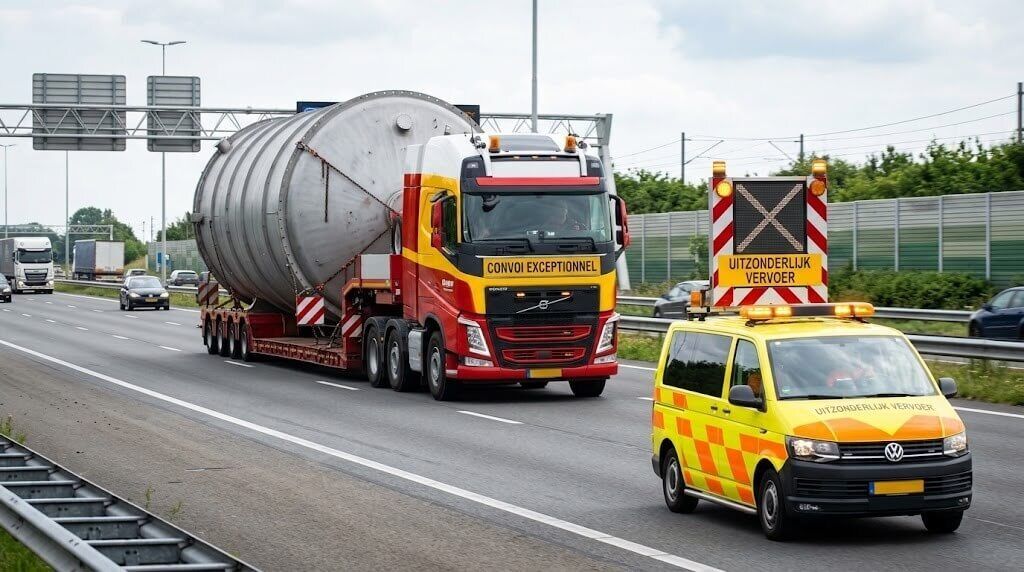
- Distinguish the four categories of abnormal-load transport and the specific rules on dimensions, mass and permits.
- Determine the required vehicle markings, including signs and lighting, and escort requirements, including pilot vehicles, safety vehicles and police.
Waste and live-animal transport
- Explain the basic conditions and registration requirements for transporting waste, including VLAREMA legislation and identification forms.
- Distinguish between commercial and non-commercial animal transport and identify the required documents, including permits and certificates of competence, for short and long journeys.
Urban distribution and the last mile
- Analyse the logistics challenges of e-commerce and urban deliveries and evaluate innovative concepts, such as night-time distribution, cycle couriers and drone delivery.
Assess certification requirements
- Determine which specialist areas require additional legally mandated training and certification, such as a formal ADR certificate or a certificate of competence for animal transport.
