
e-Transport - The life cycle of a shipment
🎯 Learning objectives
After independently completing this e-learning module, you will be able to:
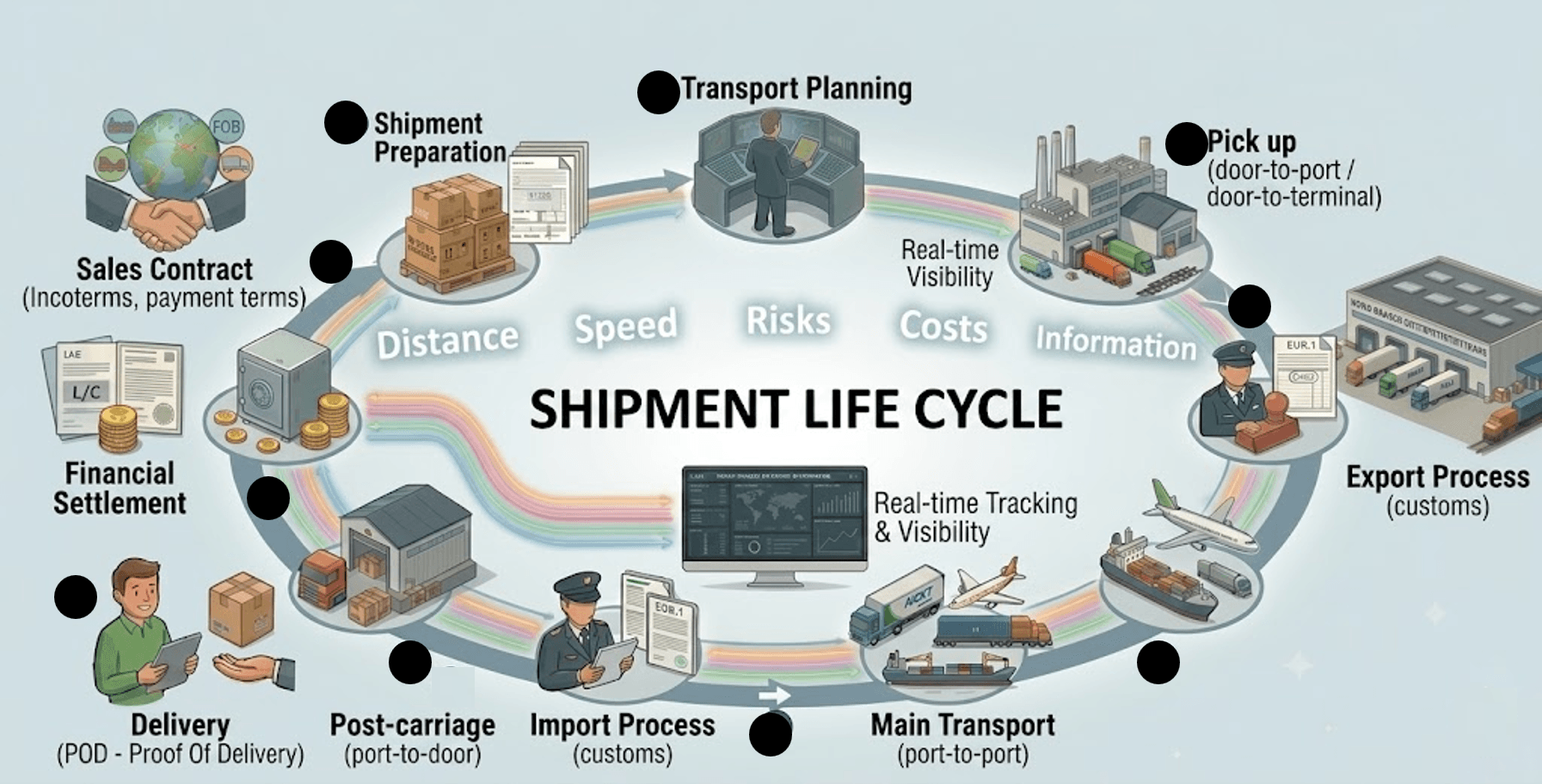
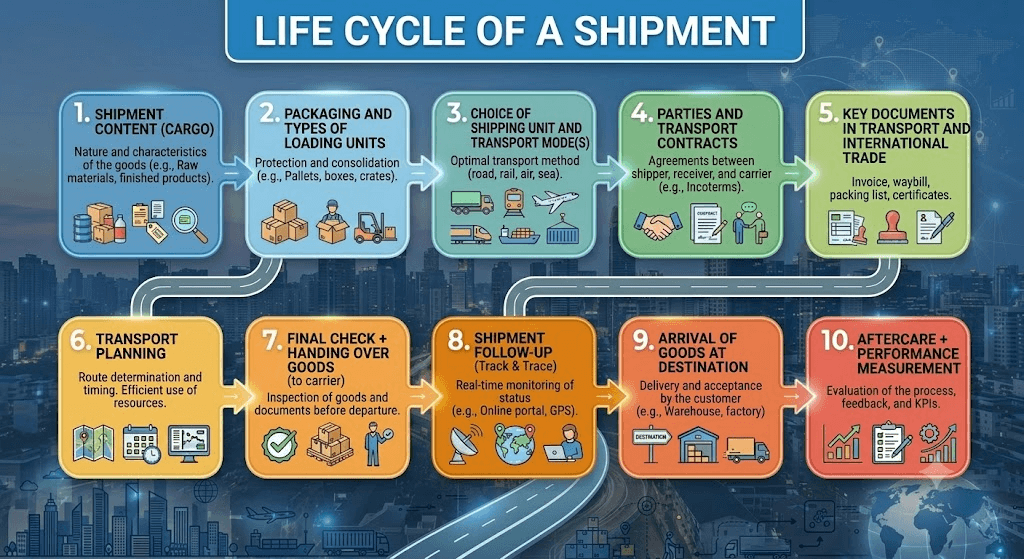
- Analyse the complete shipment life cycle: Explain the ten chronological stages of a domestic and international shipment and structure the physical, information and legal flows within them correctly.
- Optimise cargo & packaging choices: Analyse product data, primary/secondary/tertiary packaging levels, ISPM 15 standards and volumetric weights correctly to prevent damage and maximise load utilisation.
- Select transport modes & shipping units strategically: Make informed choices between road, rail, water and air transport and load units such as FCL versus LCL or Europallet versus ISO container, based on cost, transit time, risk and sustainability.
- Manage supply chain partners & contracts: Distinguish the roles of key parties, such as shippers, freight forwarders and stevedores, and apply agreements set out in SLAs, Incoterms and liability frameworks such as Belgian transport law.
- Use transport & customs documentation correctly: Prepare and process essential documents accurately, including commercial invoices, e-CMR, Bills of Lading, FCR/FBL and customs documents such as EAD, MRN and Certificates of Origin.
- Carry out digital operational processes: Understand and apply digital logistics processes, including Port of Antwerp-Bruges procedures such as CPu, TSD and VGM, in day-to-day transport management.
- Ensure real-time visibility: Use modern Track & Trace technologies, including barcodes, RFID, IoT and Blockchain, and TMS systems to actively monitor shipments and manage risks.
- Measure performance & assure quality: Apply KPIs, vendor ratings and the PDCA cycle to evaluate transport performance, handle damage and claims correctly, and carry out a transport audit.
