
e-Transport - Loading/unloading techniques & load securing (road transport)
🎯 Learning objectives
After completing this combined self-study package, participants will be able to:
Understand the legal & contractual framework
- Understand and apply the relevant European, national and regional legislation, including the Royal Decree on load securing, the Flemish Government decision and the CMR Convention.
- Define each logistics partner's specific duty to provide information and liability correctly: sender, packer, loader, carrier and driver.
Organise loading & unloading safely and efficiently
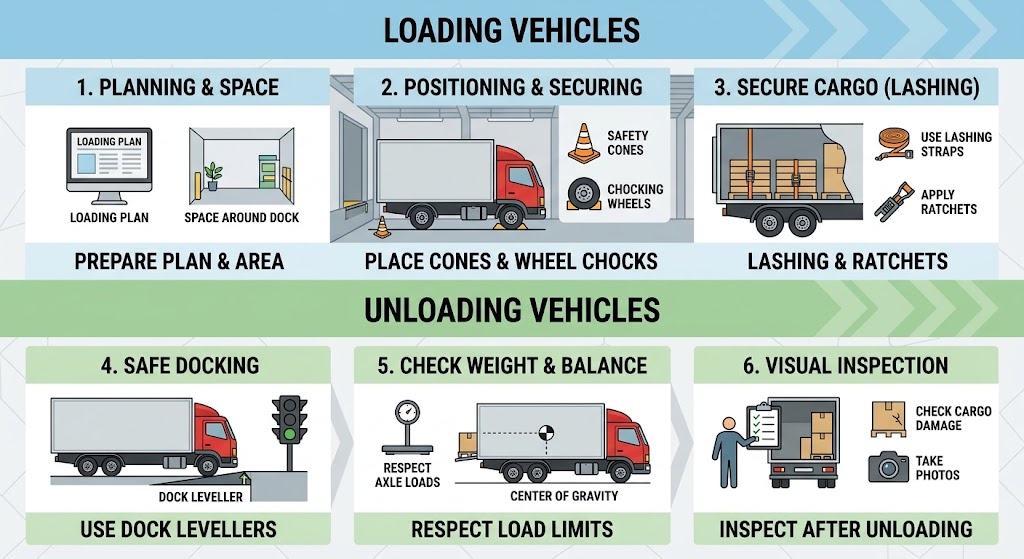
- Select and use suitable equipment both on the vehicle, such as a tail lift, crane or truck-mounted forklift, and on private premises or warehouse docks, such as dock levellers, loading ramps and semi-automatic or automatic systems.
- Recognise and comply with the safety requirements and address the risks of loading and unloading on public roads and company premises.
Build stable, optimised loads
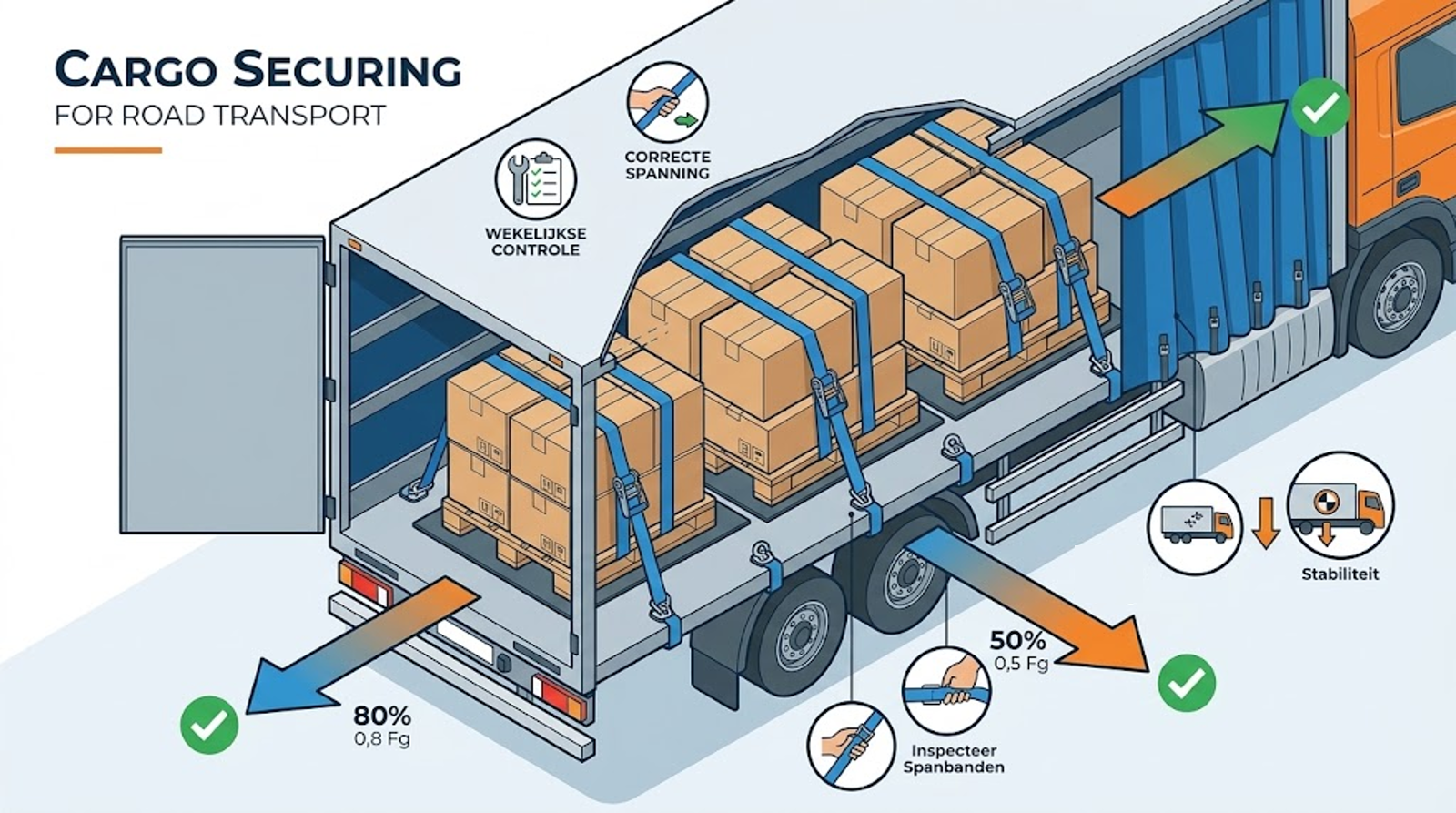
- Prepare goods in modular, stable units using pallet stacking, stretch film and strapping, and assess tipping and sliding risks correctly.
- Prepare a load plan that optimises load utilisation while accounting for maximum authorised mass, axle-load distribution and unloading sequence.
Calculate & apply forces and securing techniques
- Understand the forces acting on a moving vehicle forwards, backwards and sideways, and the effect of friction coefficients.
- Choose a suitable vehicle body, such as one certified to EN 12642 L/XL, and the right securing equipment, including lashing straps, chains, anti-slip mats and shoring bars; calculate requirements correctly and use the equipment in compliance with the rules.
