
e-Transport - Green Road Transport
🎯 Learning objectives
After completing this combined self-study package, participants will be able to:
Understand green logistics and supply chains
- Explain the principles of Green Supply Chain Design and identify strategic measures, such as packaging optimisation, nearshoring and shorter supply chains, that reduce the environmental footprint.
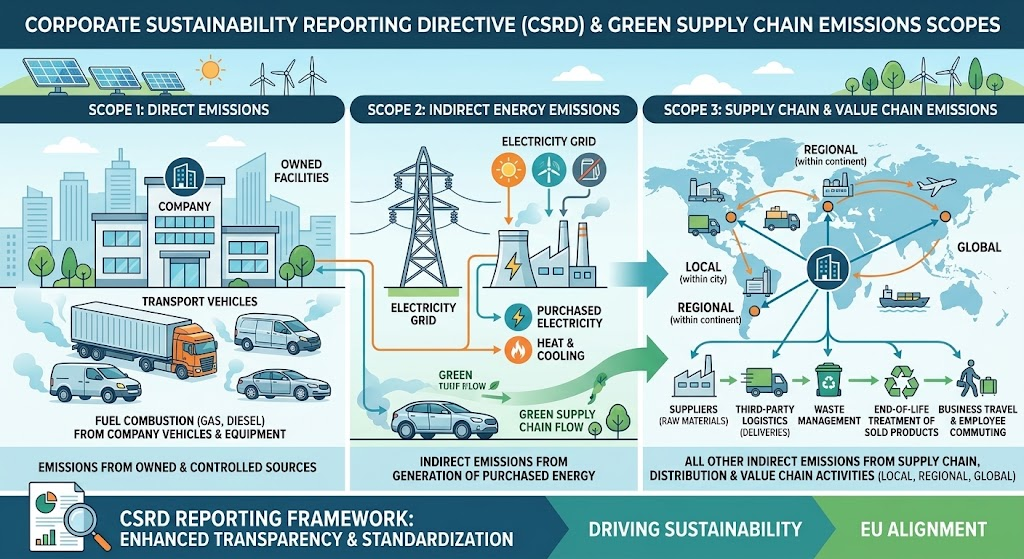
Apply CSRD in transport and assess its scope
- Understand the requirements of the Corporate Sustainability Reporting Directive (CSRD) for the transport sector.
- Assess sustainability impacts and reporting obligations systematically at internal, local, regional and global levels.
Apply route and fleet management: ICT and planning
- Analyse how Transport and Fleet Management Systems (TMS/FMS) can reduce kilometres travelled, fuel consumption and CO2 emissions.
- Evaluate the benefits of modal shift, collaborative models such as control towers, and concepts such as truck platooning.
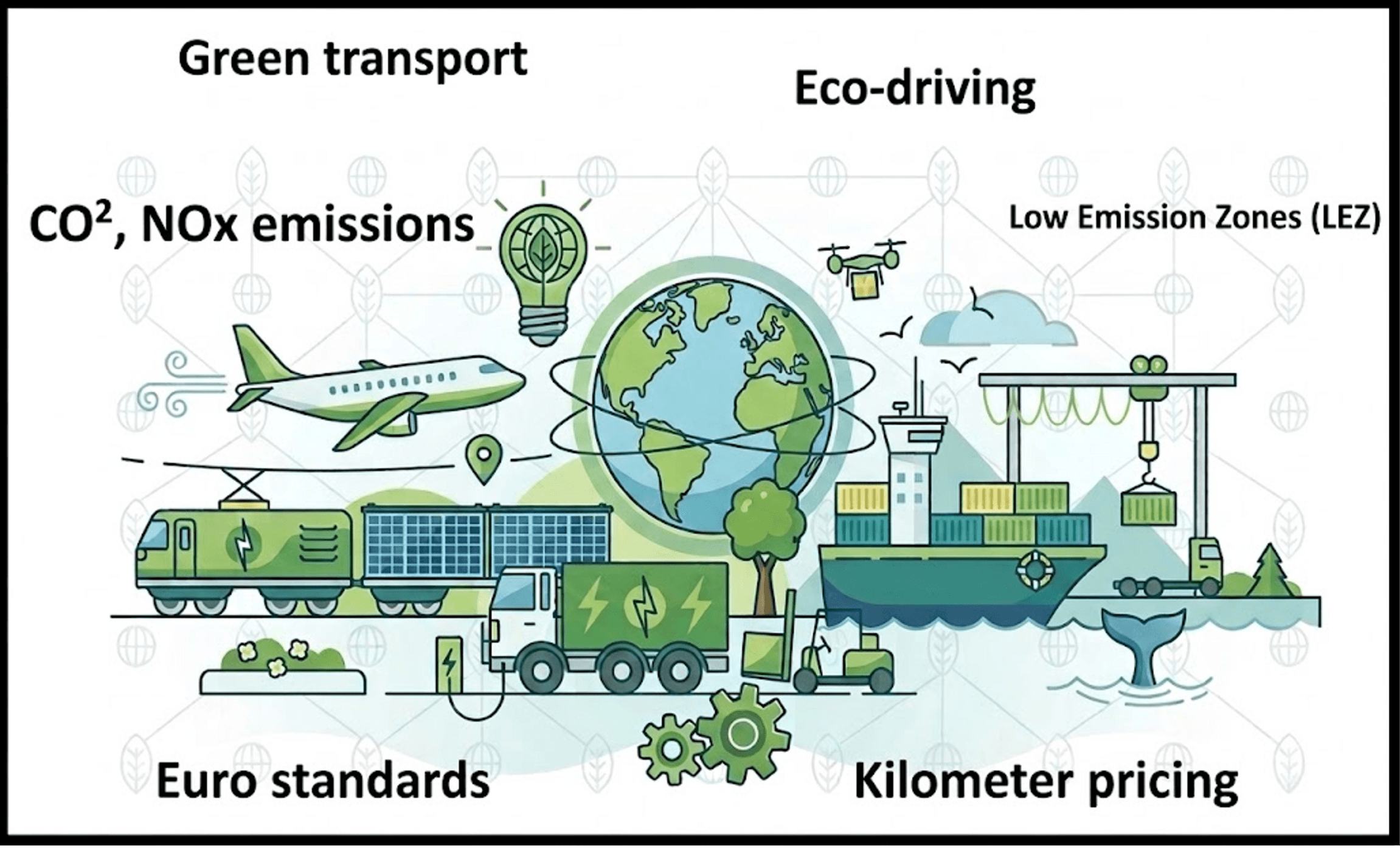
Navigate legislation and regulations: Euro standards and LEZ
- Interpret provisions on Euro standards, emission technologies such as AdBlue and EGR, and Low Emission Zones (LEZ) correctly and apply them to a vehicle fleet.
Assess vehicle technology and aerodynamics
- Understand how physical and mechanical factors, including aerodynamic drag, rolling resistance, tyre pressure, vehicle aerodynamics, longer and heavier vehicles (LZVs), and alternative or electric powertrains, affect energy consumption.
Make choices that improve fuel efficiency: eco-driving
- Explain the basic principles of defensive and economical driving (eco-driving), including torque versus power, optimal engine speed and making use of vehicle momentum, to support practical reductions in fuel consumption and maintenance costs.
