
e-Warehouse - Inventory count + cost calculation
🎯 Learning objectives
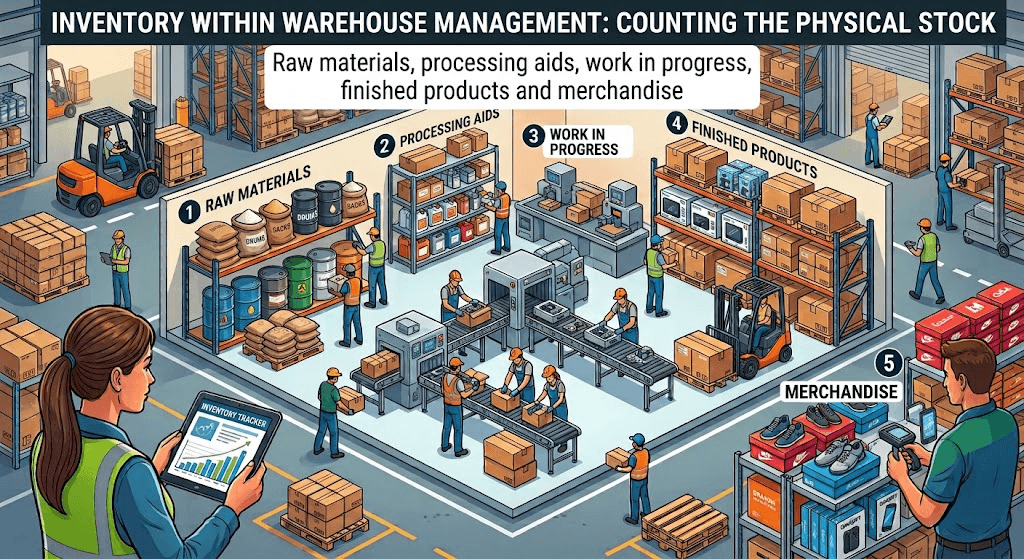
INVENTORY COUNT
- Inventory methods & techniques: Understand the difference between periodic stocktaking and cycle counting, and use tools such as WMS systems and scanners correctly.
- Counting & execution: Independently prepare and carry out accurate physical counts with minimal disruption to daily warehouse operations.
- Variance analysis & correction: Identify inventory discrepancies, establish their causes, such as theft or recording errors, and make corrections in the system.
- ABC analysis: Categorise products by value and turnover to determine the appropriate counting frequency for each item group.
- Legislation & quality: Meet financial and balance-sheet requirements and proactively contribute to reliable inventory records.
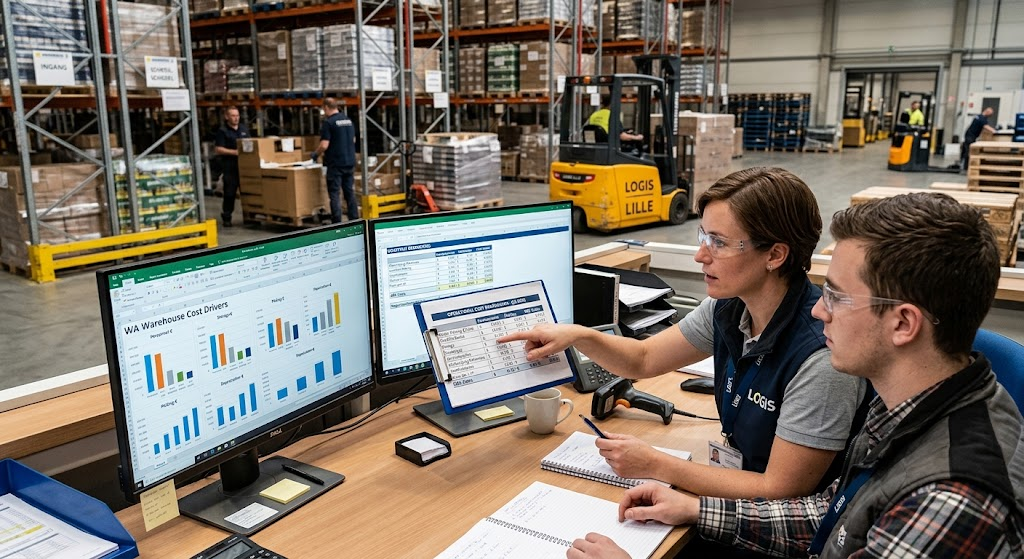
Cost calculation
- Fair pricing & rates: Determine the exact handling and storage costs per customer or product so that complex or small orders can be charged correctly.
- Insight into hidden costs: Make inefficiencies immediately visible in monetary terms, such as costly walking routes during order picking or the cost of slow-moving stock occupying pallet locations.
- Business case for automation: Provides insight into current labor costs to substantiate the payback period and ROI of automation.
- Targeted process improvement: Link savings directly to financial results to help prioritise Lean initiatives and warehouse optimisation.
