
e-Transport - Multimodal & Intermodal transport: concepts & solutions
🎯 Learning objectives
After completing this combined self-study package, participants will be able to:
Distinguish between transport concepts and terminology
- Apply and distinguish correctly between unimodal, multimodal, intermodal, combined and synchromodal transport.
- Understand how specific transport arrangements work, such as Huckepack, RoLa, RoRo and Sea/Air.
Select intermodal transport units (ITUs)
- Compare the characteristics, dimensions and applications of ISO containers, swap bodies and semi-trailers, such as mega, coil and tautliner trailers, and select the right unit for a specific load.
- Understand ILU and BIC codes, as well as securing and handling techniques.
Assess terminals and seaports
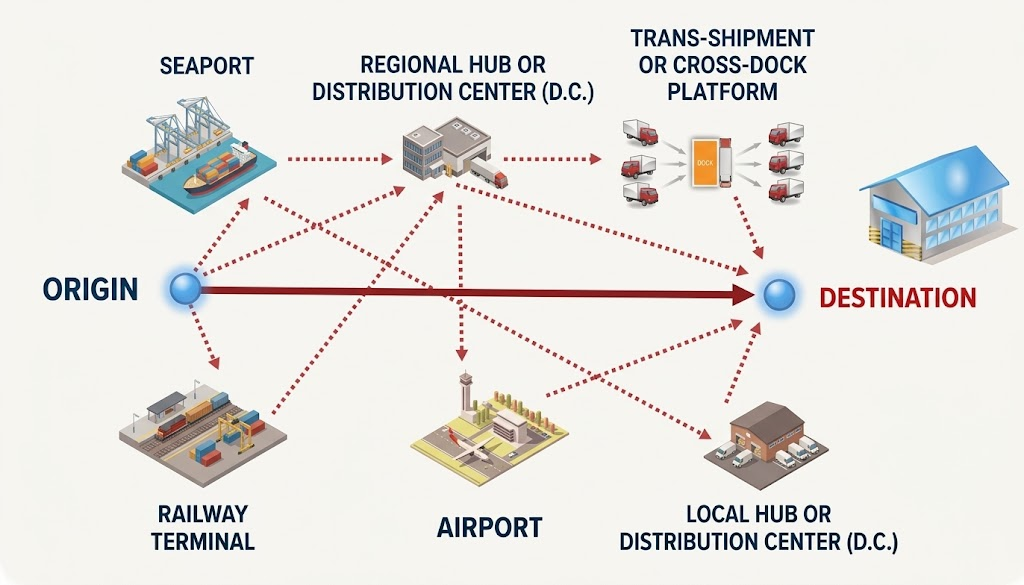
- Analyse the role of seaports, including mainports, hub-and-spoke networks and transshipment ports, and inland terminals, including dry ports and trimodal terminals, within the integrated supply chain.
- Understand how transshipment systems, such as gantry cranes, reach stackers, straddle carriers and AGVs, work and how logistics handling is organised.
Design and develop transport networks
- Map and build continental and intercontinental transport networks.
- Make strategic network choices by combining main haul with first/last-mile transport, taking account of capacity, hubs and logistics corridors.
Perform modal-shift calculations and trade-off analyses
- Identify and calculate fixed and variable leg costs within a combined transport chain.
- Compare different multimodal routes mathematically on the basis of total cost, transit time and risks to select the most efficient solution.
Evaluate bottlenecks and legal aspects
- Assess legal risks and liability, including CMR, CIM, Hague-Visby and Montreal, when switching between transport modes.
- Recognise and address operational and physical bottlenecks, such as track gauges, bridge clearance heights and waiting times.
